
The Duality of Joy: "Happy By Night"
Lach Butler’s 2018 photograph "Happy By Night" captures the iconic entrance of Luna Park, a prominent amusement park, in a manner that is both enchanting and unsettling. This image, taken under the cloak of darkness, employs stark contrasts and dramatic lighting to explore themes of joy, artifice, and the enigmatic nature of human emotion.
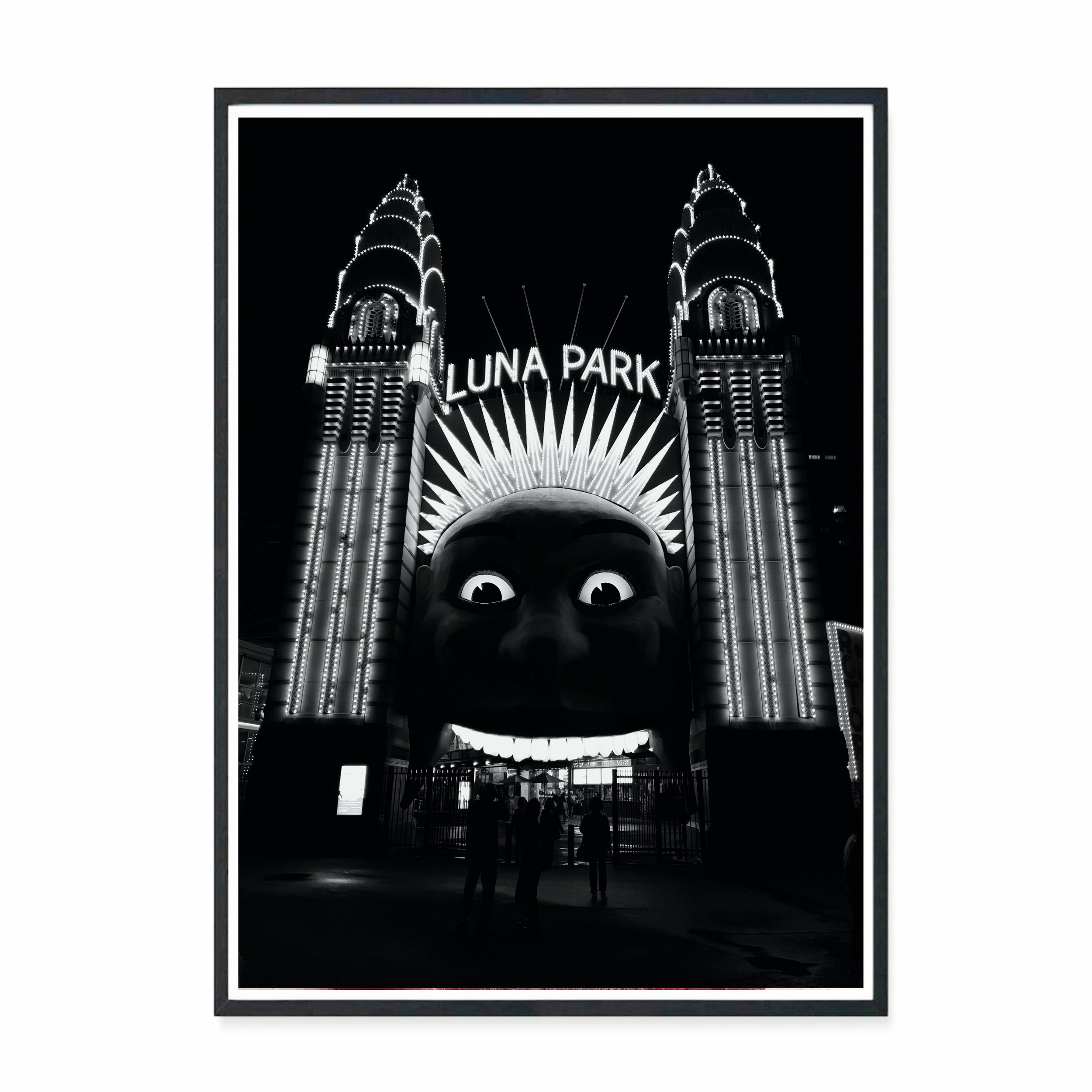
The photograph’s composition is immediately striking. Dominated by the illuminated, grinning face of Luna Park, the image juxtaposes the playful facade with the surrounding darkness. The face, adorned with exaggerated features, evokes a sense of manufactured happiness, a spectacle designed to draw visitors into a world of amusement and distraction. The glowing lights around the figure’s crown and the park’s towers create a halo effect, enhancing the surreal, almost otherworldly quality of the scene.
Butler’s use of black and white in "Happy By Night" is particularly effective in highlighting the dichotomy between light and shadow. The absence of color strips the scene to its essential elements, focusing attention on form and contrast. The bright lights of Luna Park’s entrance stand out starkly against the black void of the night, creating a visual tension that reflects the underlying theme of duality. This tension invites viewers to question the nature of the happiness being presented—is it genuine, or merely a facade?
The photograph also captures the paradox of amusement parks themselves—places designed to evoke joy and excitement, yet often harboring a sense of eeriness when viewed through a different lens. The larger-than-life face, with its wide eyes and broad smile, borders on the grotesque when stripped of its colorful context. This transformation from a cheerful icon to a haunting figure speaks to the complexities of human emotion and perception. It suggests that joy, especially when manufactured, can possess an unsettling depth when scrutinized closely.
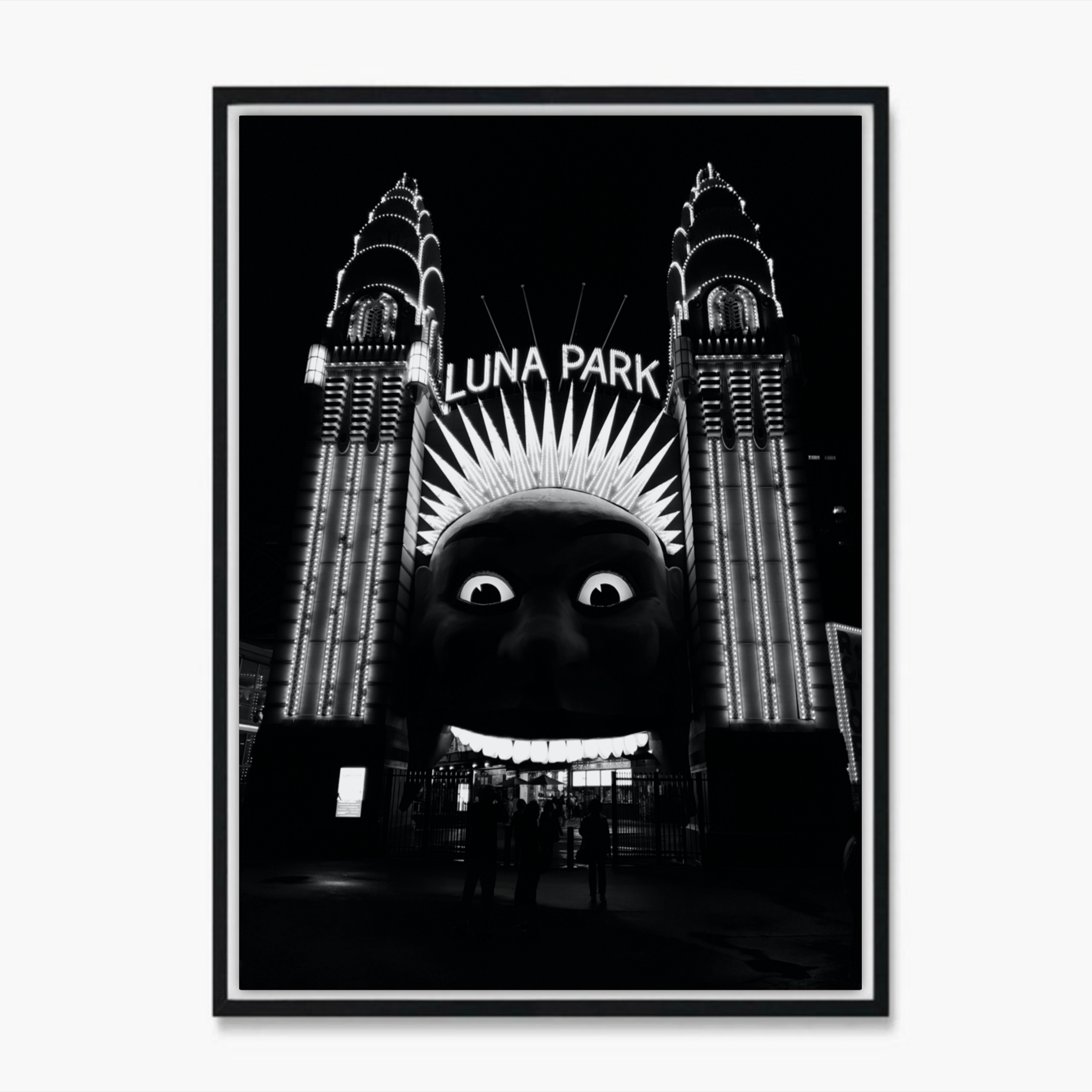
By emphasising the artificial lights and exaggerated face, Butler challenges viewers to discern the authenticity of the happiness they seek amidst the glare of amusement & the shadows of introspection.
In the foreground, the silhouettes of visitors add a layer of mystery and intrigue. Their anonymity and small scale compared to the towering facade emphasize the contrast between human presence and the monumental structure. These figures, shrouded in shadow, appear as passive observers, perhaps reflecting the way individuals interact with the spectacle of amusement parks—caught between engagement and detachment, between immersion in the manufactured joy and an awareness of its artificiality.
"Happy By Night" can also be interpreted as a commentary on the commodification of happiness. Luna Park, as an entertainment venue, represents the commercialization of joy and the consumer culture that seeks to package and sell experiences. Butler’s photograph, by highlighting the artificial lights and the oversized, caricatured face, underscores the performative aspect of this commodification. It challenges viewers to consider the authenticity of the happiness they seek in such environments and the societal pressures that drive the pursuit of manufactured joy.
Moreover, the nighttime setting of the photograph adds a layer of symbolism. Nighttime often evokes themes of introspection and the subconscious, suggesting that beneath the surface of public amusement lies a deeper, more complex emotional landscape. The interplay of light and darkness in Butler’s image mirrors the inner conflicts that individuals might experience—the longing for genuine happiness amidst the overwhelming presence of its artificial counterpart.
Butler’s "Happy By Night" is a sophisticated exploration of the themes of joy, artifice, and the human condition. Through masterful composition, the use of black and white, and the interplay of light and shadow, Butler invites viewers to reflect on the nature of happiness and the paradoxes inherent in its pursuit. The photograph serves as both a celebration and a critique of the ways in which amusement and entertainment are presented and perceived, urging a deeper contemplation of the true essence of joy in a world increasingly dominated by spectacle and artifice.
PRINT FEATURES
Free Express Shipping On All Prints
Freshly Printed On Your Choice Of Premium Papers
All Come Unframed & Are Signed On Back
*Prints May Not Appear 100% Same As On Site
