
The Enchantment of "Luna Nights"
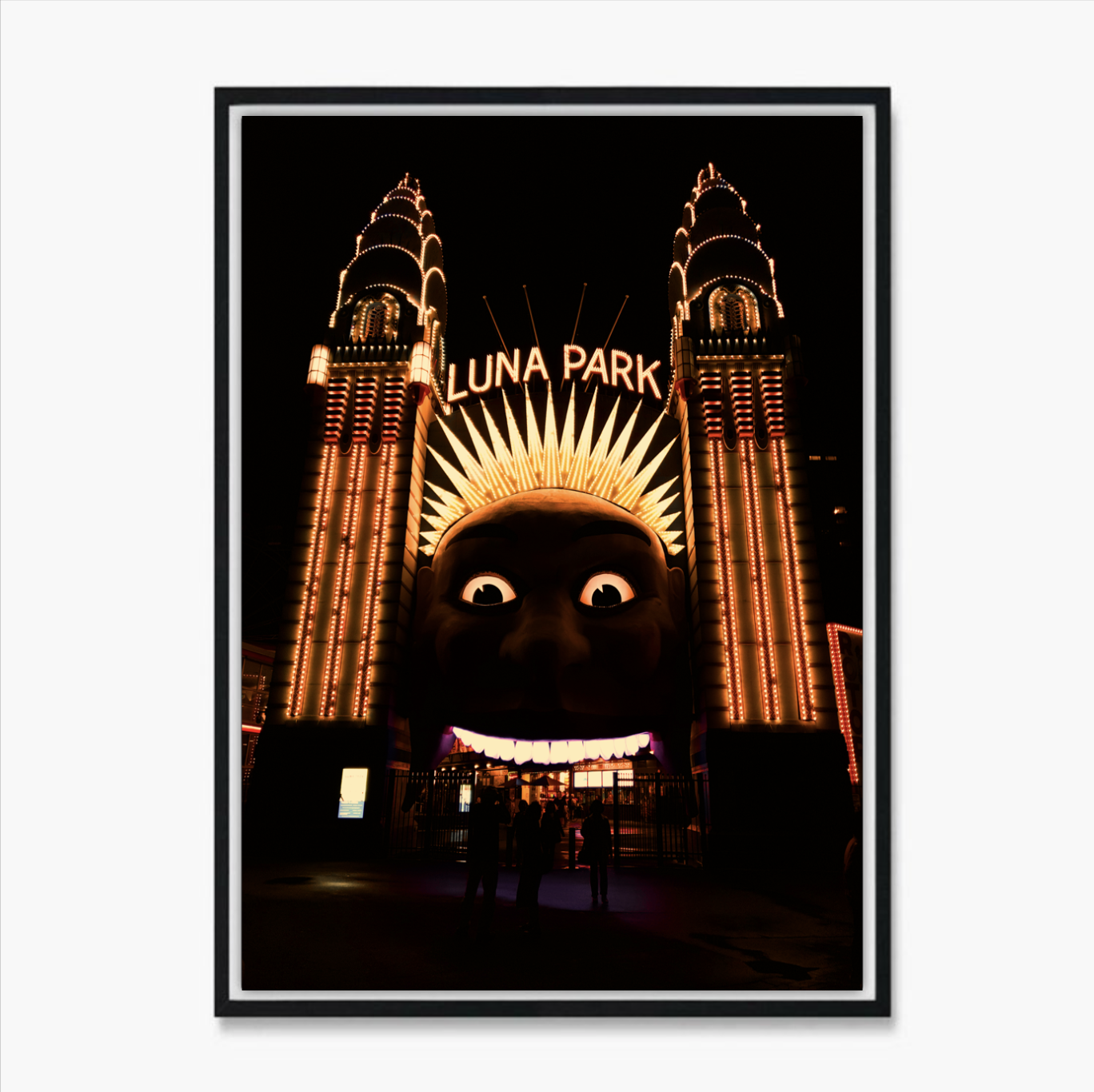
In the photograph "Luna Nights," captured by Lach Butler in 2018, the iconic entrance of Luna Park is bathed in a mesmerizing glow, transforming a familiar landmark into a fantastical realm. This image is a masterful exploration of light, architecture, and atmosphere, inviting viewers to experience the nocturnal magic of one of Sydney's most beloved amusement parks.
The composition of "Luna Nights" is immediately striking. The entrance to Luna Park, with its towering spires and radiant facade, dominates the frame. The symmetrical arrangement of the towers and the central, wide-eyed face create a powerful visual focal point that draws the viewer in. The use of symmetry not only emphasizes the grandeur of the structure but also imbues it with a sense of stability and order, contrasting with the whimsical and playful nature of the park itself.
The interplay of light and shadow is central to the photograph's impact. Butler skillfully captures the warm, inviting glow of the lights that outline the architecture, creating a vivid contrast against the deep, velvety darkness of the night sky. This contrast not only highlights the intricate details of the facade but also enhances the surreal, almost dreamlike quality of the scene. The lights, arranged in patterns that accentuate the curves and lines of the structure, evoke a sense of movement and energy, mirroring the excitement and joy that Luna Park promises.
"Luna Nights" is not just a photograph of an amusement park entrance;
It’s a celebration of the enchantment and nostalgia that Luna Park represents.
The face at the center of the entrance, with its exaggerated features and broad, inviting grin, serves as both a literal and metaphorical gateway. It beckons visitors into a world of enchantment and nostalgia, where the ordinary is left behind, and the extraordinary takes over. The glowing eyes and the sunburst crown of lights above the face add an element of the fantastical, suggesting a guardian or a mystical figure watching over the park. This anthropomorphic quality imbues the structure with personality and character, enhancing its role as a symbol of wonder and escapism.
The silhouettes of people at the base of the entrance add a human element to the scene, grounding the fantastical elements in reality. These figures, small in comparison to the towering structure, emphasize the scale and grandeur of the entrance. Their presence also adds a narrative dimension to the photograph, suggesting stories of families, friends, and lovers embarking on adventures within the park. The anonymity of these silhouettes allows viewers to project their own memories and experiences onto the scene, deepening their emotional connection to the image.
"Luna Nights" is not just a photograph of an amusement park entrance; it is a celebration of the enchantment and nostalgia that Luna Park represents. Through his lens, Butler captures the essence of the park's allure—the promise of joy, excitement, and a temporary escape from the mundane. The photograph's rich, warm tones evoke a sense of comfort and familiarity, while the dramatic lighting and composition transform the entrance into a beacon of wonder.
In the broader context of urban and night photography, "Luna Nights" stands out for its ability to evoke strong emotional responses through its use of light, composition, and subject matter. It draws on the traditions of architectural photography, capturing the grandeur and detail of the structure, while also embracing the principles of fine art photography, using light and shadow to create mood and atmosphere.
In conclusion, "Luna Nights" by Lach Butler is a sophisticated and evocative piece that transcends the boundaries of traditional architectural photography. It captures the magic and allure of Luna Park at night, transforming a familiar landmark into a symbol of wonder and nostalgia. Through its masterful use of light, composition, and narrative elements, the photograph invites viewers to step into a world where the ordinary is left behind, and the extraordinary takes center stage.
PRINT FEATURES
Free Express Shipping On All Prints
Freshly Printed On Your Choice Of Premium Papers
All Come Unframed & Are Signed On Back
*Prints May Not Appear 100% Same As On Site
